
News
Spotlight on St.Helens
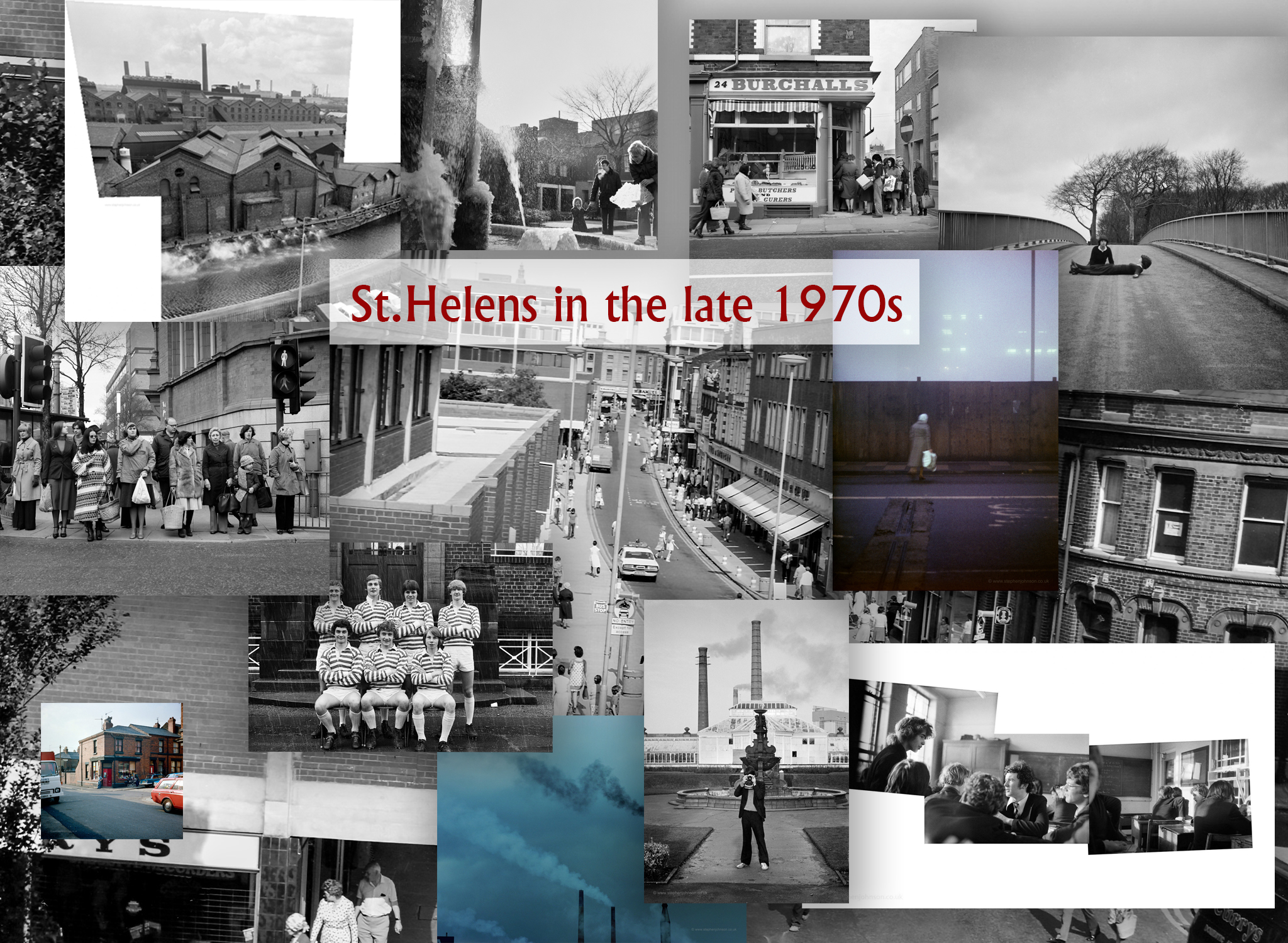
To celibrate the release of the new St.Helens based Glass Eye Magazine issue (https://www.barrygore.co.uk/glasseye-magazine) which contains my story of the filming of Chariots of Fire at Cowley School I thought I would promote my other images of the period for any new visitors to see. Just CLICK HERE to see the images individually

Continuity

This lady was part of the production team working on the Granada TV production of “Strike” about the rise of the Solidarity movement in Poland, filmed in Manchester in 1981.
I didnt disturb people as I photographed them as I was aware I had to stay low key as I documented the process of making a factual based drama. She is either working with the script team or is part of continuity to ensure elements match across scenes. It was a 16mm film production, sound was captured using quarter inch tape on Nagra recorders. Granada was a unionised company and I was asked if I was a union member by one of the crew, Adam’s dad (the writer) had invited us and we were just students with no intention of profiting from the images so we got a pass. Years later I think the photos would be of value to the crew and I would be very happy to share them, if you know this lady please let her know, would love to know more about her work.
influence

A rough sea on the coast of Cornwall, 1981.
I was there as part of a group of students staying at a cottage belonging to one of the lecturers. Above the fireplace in the Livingroom was a large grainy print of the coast. Roger Beacroft (the lecturer) speculated on who amongst us would be influenced by it. I did not disappoint!
35mm HP5 film is not generally a good choice for landscapes but its dark grainy nature worked well in this landscape.
A miserable day

Ormskirk Street, St.Helens, Merseyside 1978. Building site for the Nat West Bank.
Wearing a long coat, a head scarf and with a plastic bag in hand a lady makes her way across the road.
In photography it’s easy to glamorise, to photograph the extra ordinary. It’s harder to document the ordinary.
In the gloom and the cold I found a kind of beauty.
The Prisoner

An abandoned room at Portmeirion Village 1982. “The Prisoner” starring Patrick McGoohan was filmed there and it had a profound effect on me as a very young boy when it was transmitted in 1968. It was exciting of course and the high tech of the time was a draw but it was the concepts and meaning behind the surface that attracted me. No 6 -McGoohans character in the series was not the traditional hero type figure, the series played with the idea of the individual and society. “Who is number 1?” – “You are number 6!” it was flagged at the start of evey episode!
Visiting Portmerion on perhaps my last family holiday in 1982 I was really pleased when I climbed a staircase (I wasnt meant to climb) and found this scene through the glass of the door. 24/7 monitoring of the prisoner was central to the series and this speaker on the cabinet and pens strewn on the floor looked like a low tech version of that.
In retrospect I can see how No 6 could be described as a hero figure by Ayn Rand, certainly problematic. Thankfully in 1973 I was similarly thunderstruck by a very different man: Jacob Bronowski in his 13 part documentary “The Ascent of Man” which contains some of the most emotionaly powerful and humanistic moments on TV.
Retouching the past

Not my picture. A print from 1959 of my mother and fathers wedding.
As a child, perhaps 5 years old I found the picture and used a blue biro pen to scribble on it. I clearly remember doing it. I liked doing it.
When my mother and father found out there was hell to pay.
Some 58 years later I use a pen again (a wacom pen on a wacom tablet) to undo the damage.
Disco at the Arbouretum pub in Nottingham 1982/3

The Arboretum in 1980 was a pub for older people, there was live music from singers in the style of Frank Sinatra and others of that period.
Within a short time it was refitted for the younger crowd. Dress code to get in: no trainers, smart attire.
The atmosphere was intense. Groups of girls, groups of boys. Overcoming the friction with music and alcohol.
Tiko

Tiko was Mrs Saper dog in Tyrwhitt Road. Mrs Saper was my wonderful landlady originally from Poland.
Tiko was a very easy going dog and a real member of the family. Before I moved into the house I used to visit her son Adam and stay in a spare room.
One time I remember going to see a film “The Entity” at the largest screen in London and sat at the front, Adams friend got us free tickets as she worked in the industry. It was an especially scary film so I appreciated Tiko sleeping on my bed that night!
Taken on a 1932 Voigtländer Brillant V6 camera with a wide aperture (perhaps wide open at f4.5. I love the image drawing, tones and colours from this lens. A later version of this camera was copied by the Russians and called “Lubitel” My first Lubitel cost £11.75 in 1975 and had a sharper lens.
Living history
 |
 |
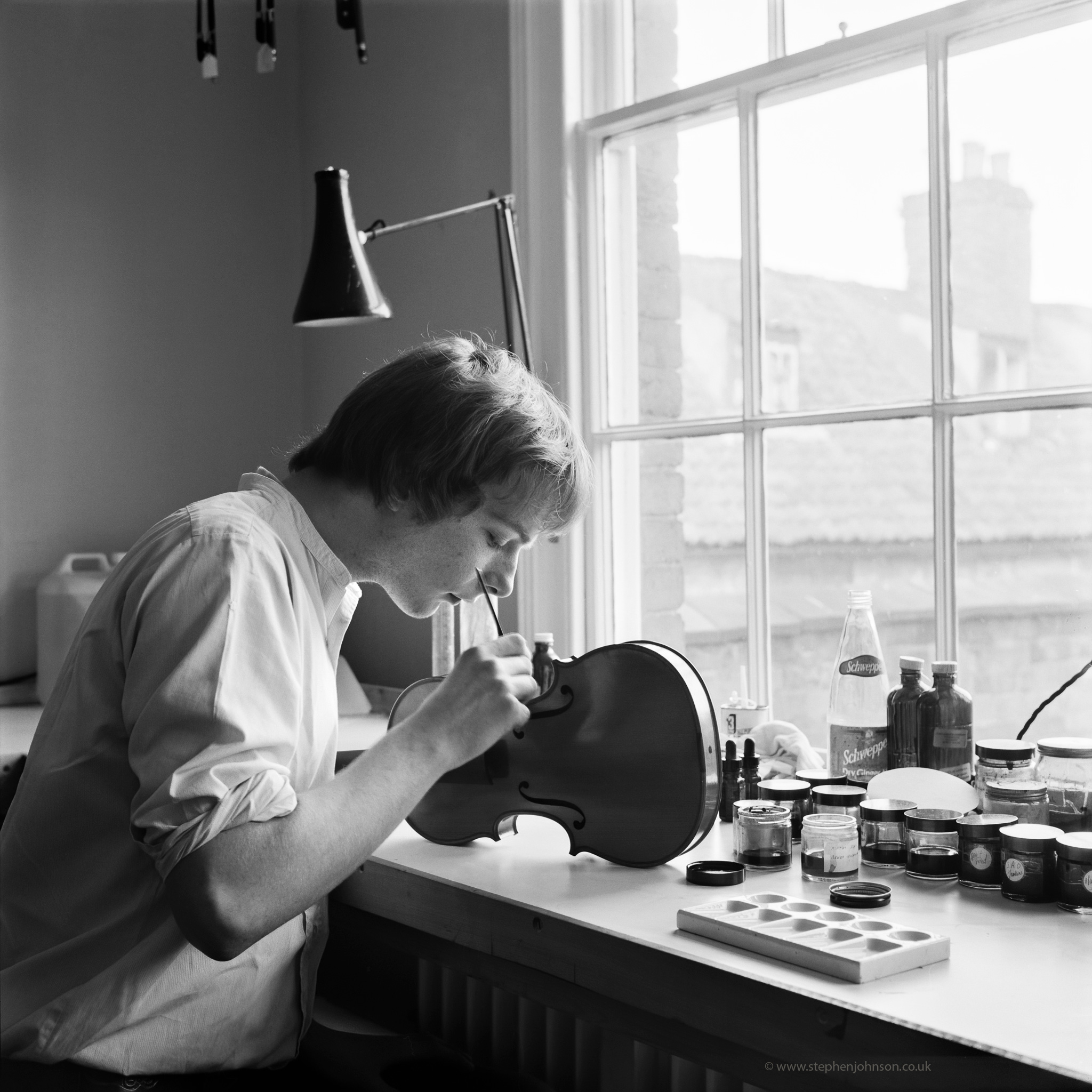 |
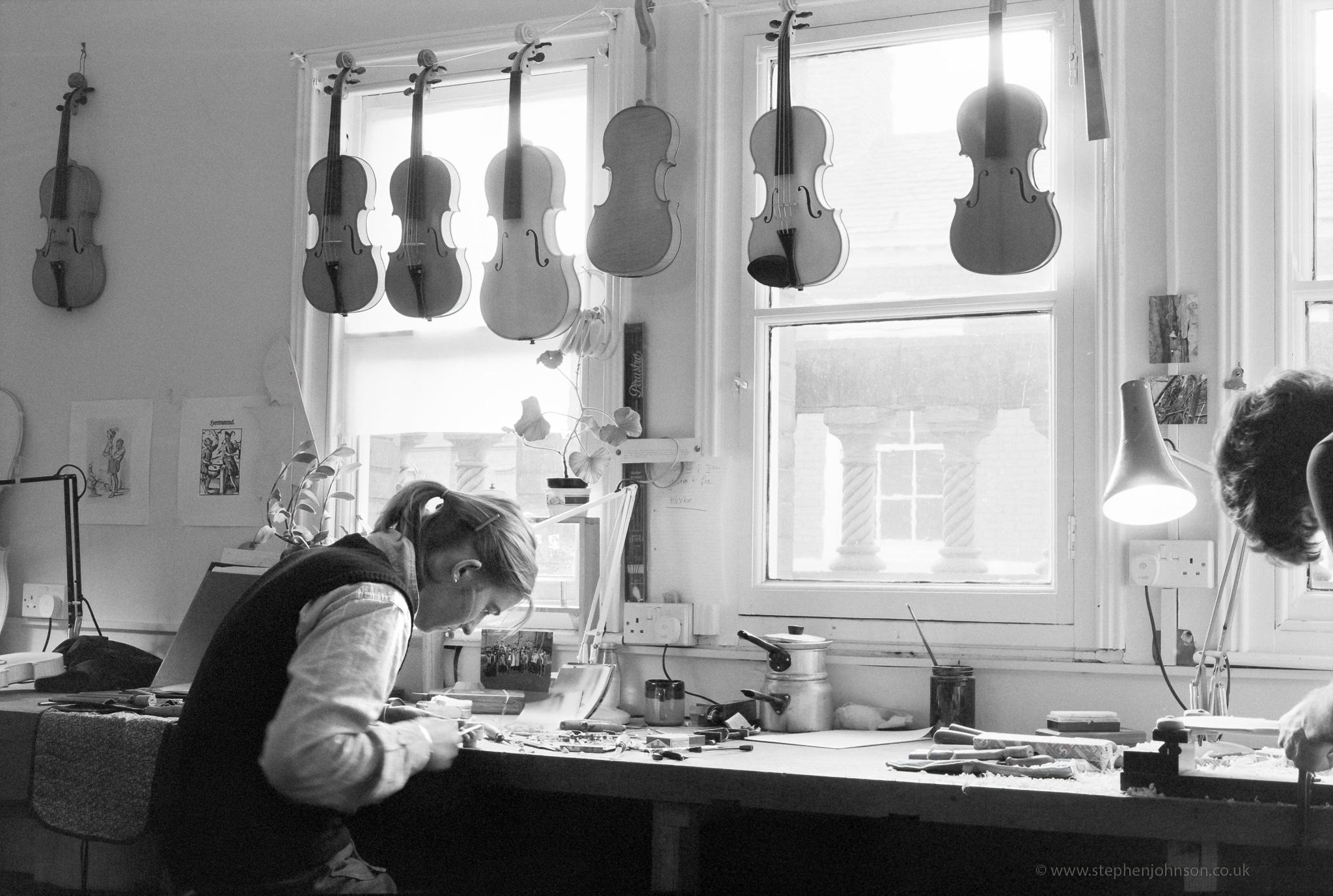
I photographed the prospectus for Newark Colledge in I think 1981 / 1982 as part of my photo course. I visited each department in turn but I remember best the visit to the violin making department.
The students were from all over the world and I remember the calm but focused atmosphere. It turns out that the people I photographed then have gone on to be significant figures in their field.
Hans Johannsson had left a year or two earlier but I was asked by Brian FitzGibbon the director of a short documentary if I would supply some images taken in the early 80s, I was happy to do so. Its well woth a watch as the director has made a sensitive and well rounded overview of Hans’s journey.
I love the fact that Hans whilst respecting the past thinks above and beyond what has been to what could be and is still prepared to experiment.
Watch the Video here; https://youtu.be/EhF26dlwX8M
Towards Cromer Pier
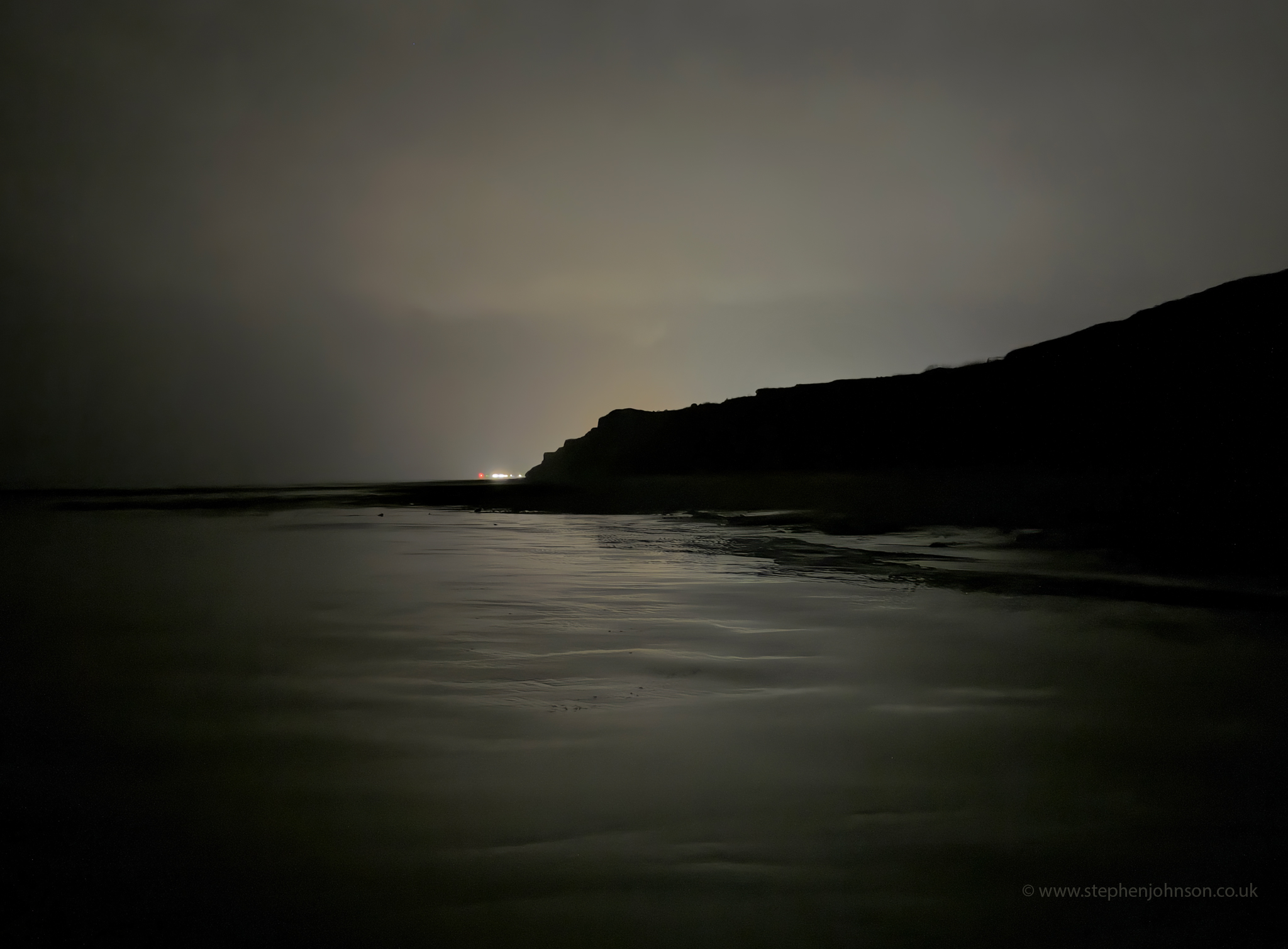
I had been woken up by our cat Tiger Lilly and could not get back to sleep so I went for a walk in the dark December night with a light rain falling.
The tide was low so I walked from Sheringham to East Runton on the beach, I had a torch built into my hat but when the going was smooth I turned it off and found myself in the greyness.
I could hear the waves to my left but only see a thin line of lighter grey of them crashing. I wasn’t so much walking through a landscape as walking through a tone scape.
When I turned the corner from West Runton I could see the pier at Cromer, bright in the night. It was 5:37am
iPhone not film. If I did have a film camera with me I would have also needed a tripod.
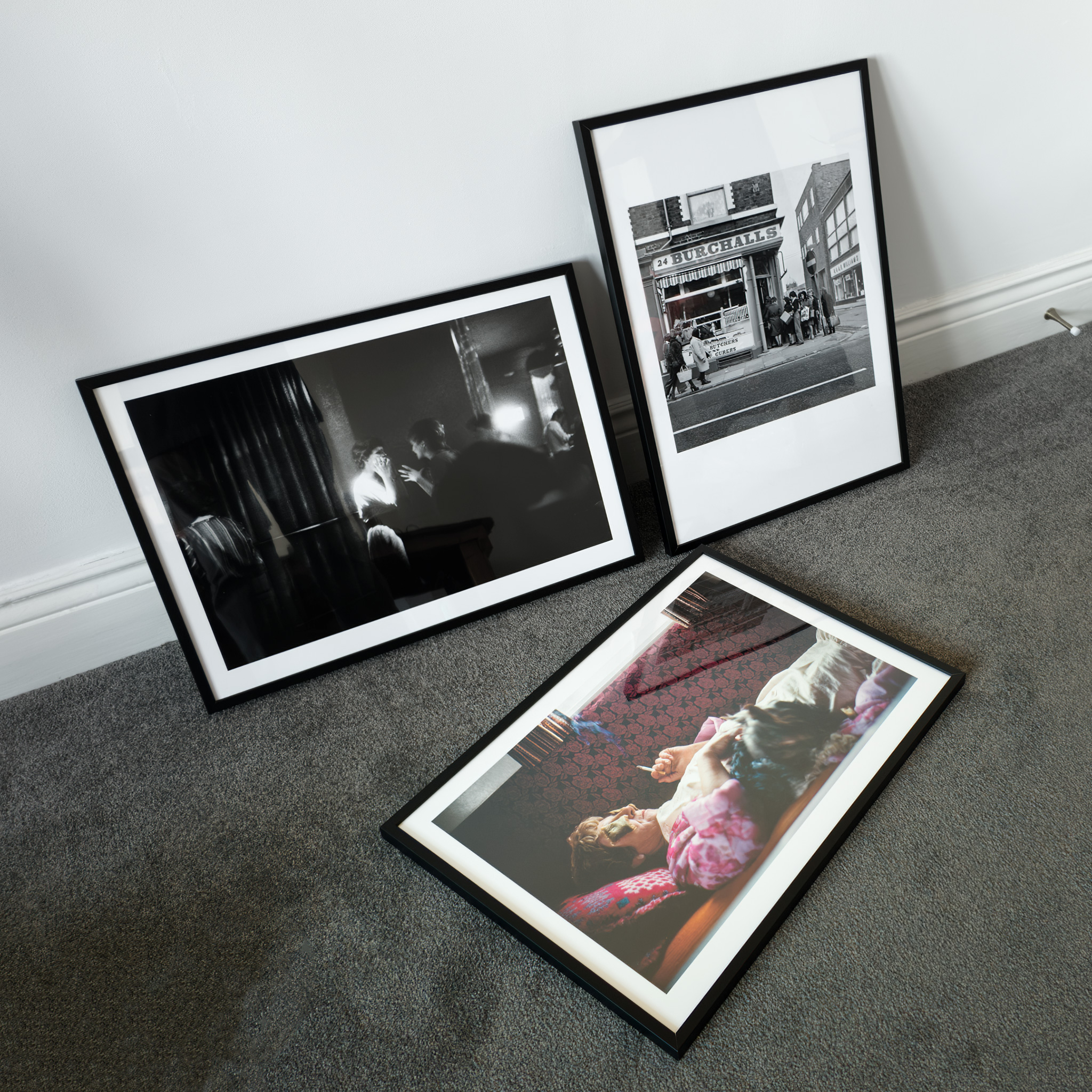
3 A2 Photographic prints rather than screen images
I will be in St.Helens my home town this Friday (14/07/2023) to see the exhibition “Creative Roots” at the World of Glass Museum. I was kindly asked to submit some of my documentary photography work and it joins others across all media and arts that represent the creative output of native St.Helens people. Looks to be worth a visit. I will post the material from the exhibit once it closes on the 9th September 2023. Entrance is free.

Update: 08/11/2023
My A2 prints from the exhibition are back, nicely wrapped and undamaged. Many thanks to Kathryn Raven and her team at The World of Glass Museum for the opportunity to show them.
If you would like to read captions and the bio I sent to the exhibition then click here for a pdf: Stephen Johnson – Creative Roots
Guided by the universe
I dont show all my images here, some have meaning only for a small group of people.
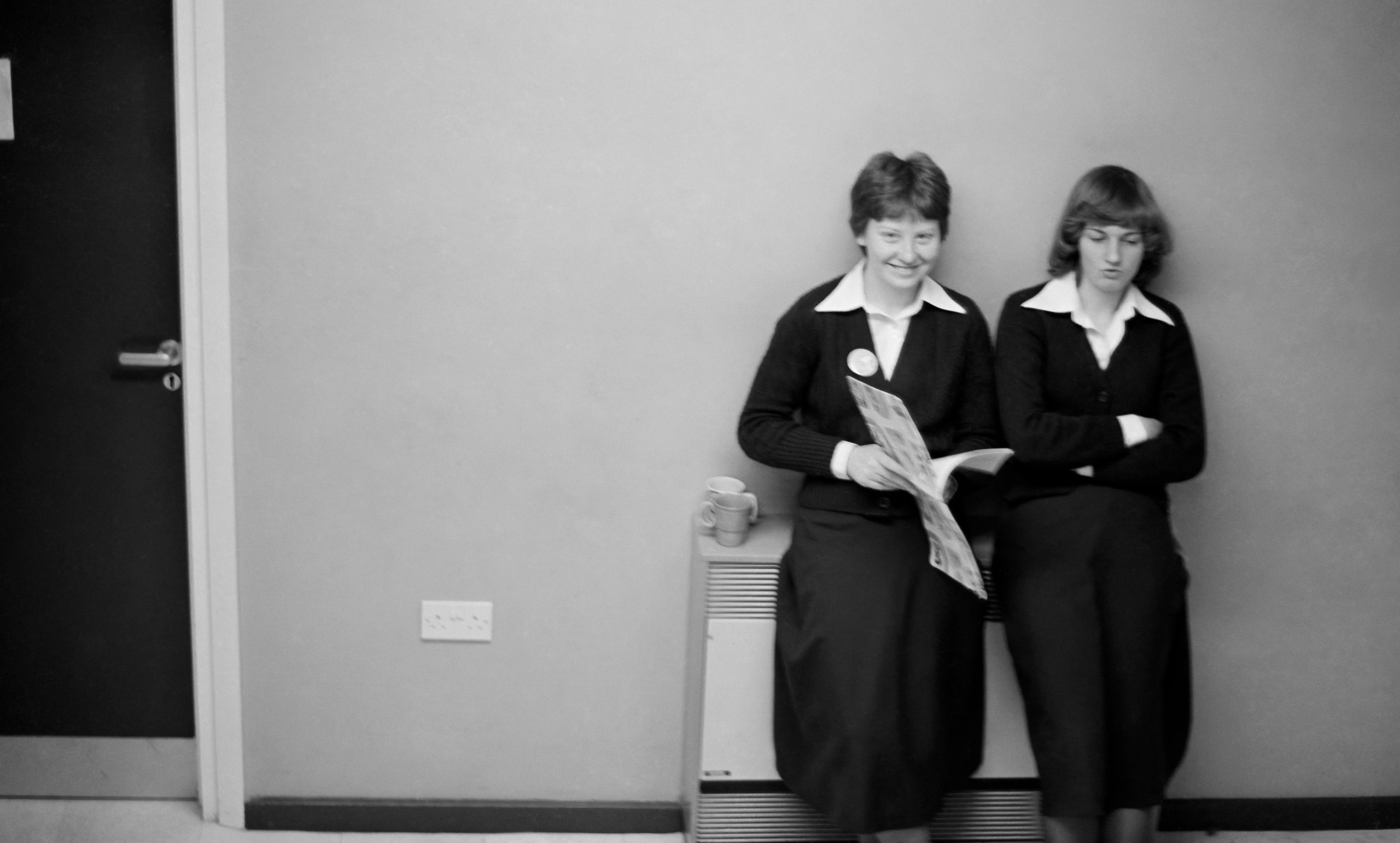
Last week I was looking through some old pictures from my time at Cowley School in St.Helens and came across this picture of two fellow pupils enjoying a tea break in the sixth form centre. Not the best picture in the world but I was struck by the beautiful smile of the girl on the left. Her name is Jean Evans. Jean also went to my primary school.
I posted the picture onto the Old Cowleans facebook page for other to see and within an hour had a reply from someone who had the same day heard from Jeans husband of her death.
The news made me sad of course. The coincidence was striking. It had been a busy day and I should have been on a screen break, instead I looked through my old images and this one stood out and I wanted to share it.
I have not talked to or seen Jean for 43 years but in my mind I could have taken this picture yesterday.
Thank you for your lovely smile Jean.
Know your place!

As a small child growing up in the 1960s I saw around me echo’s of the old ways of doing things, a deference to Class, State and Church.
Part of the excitement of watching Monty Python on a black and white tv in the early 1970s was to see those corrupted institutions mocked for the thin charade they were.
A new Nationalism (National Conservatism) wishes us to return to a more hierarchical, passive and subservient mode based on a fictional “golden age” centered some time in the 1950s in which politicians are not questioned and everyone “knows their place”. This is dangerous thinking.
Swear an oath to a King? perhaps best not to.
Mum deep in thought

Inside a caravan in Wales, late 1970s family holiday. Secrets and the past, alone in her thoughts.
Somehow I will find my way home

currently lost.
The Arbouretum Nottingham, a foggy night in 1982. Pre war Voigtländer Brillant camera.
A St.Helens boy in the Antarctic

The penguins were lovely, the landscape changed constantly as the ice moved.
Seeing the light and colours of this place first hand was a real insight. Sometimes a reddish colour could be seen in distant snow, only a small cast but one I have previously thought was a camera artefact.
Sony A7c with 85mm lens, digital not film. Many thanks to Sue Flood for the opportunity.
Alice

My Daughter Alice Johnson. The centre of my world. 1998 – 2022
I have made a website to remember and celibrate Alice’s life, you can see it here: https://alice-johnson.uk/
But What?

Taken on (my only) skiing trip to France. Late 1980s? Kodachrome 35mm slide film.